
Mud fever in horses: how to spot it, treat it and prevent it
Scabs on the pastern, raw skin, lameness: causes, signs, care and prevention of mud fever, and when to call the vet.
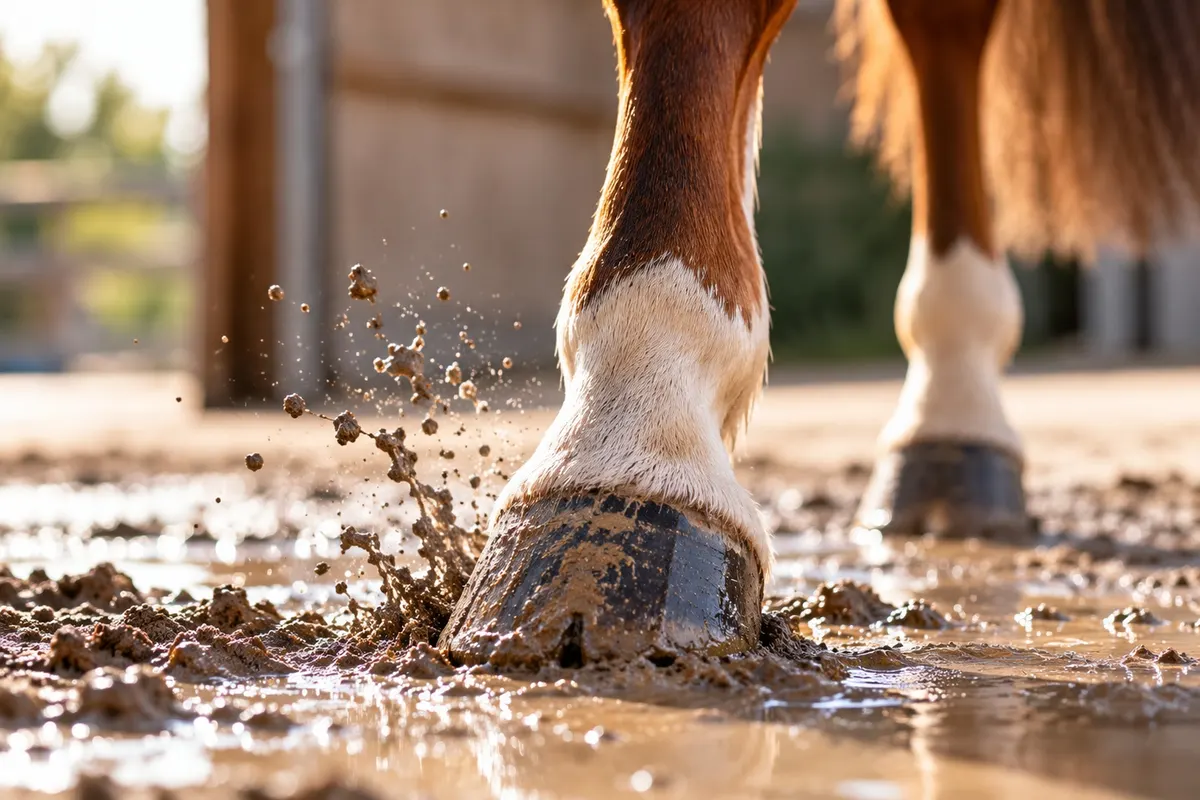
Every autumn, as the rain returns and paddocks turn to mud, it is back: mud fever. Scabs in the back of the pastern, matted hair, raw skin… This skin condition is common and often mild if caught early, but it can become painful and make a horse lame if it is left to take hold.
Not what its French name suggests
In French it is called gale de boue, literally “mud mange”, yet it is not primarily a parasitic mange. Vets prefer the term pastern dermatitis; it is also known as greasy heels or cracked heels.
It is most often a bacterial skin infection. The bacterium most often blamed, Dermatophilus congolensis, thrives in wet conditions. Other germs can be involved (staphylococci, Pseudomonas), as well as fungi or mites.
The mechanism is simple: healthy skin happily hosts many micro-organisms. But when the outer layer of the skin is weakened, often by prolonged wetness, these germs take the opportunity to settle in and cause inflammation.
Risk factors
- long spells of mild, wet weather;
- a horse standing for long periods in deep mud;
- skin that is already damaged (small wounds, rubs);
- legs hosed down and not properly dried;
- heavy sweating under tack or a rug;
- white legs: non-pigmented skin is often more affected;
- another underlying skin condition: mites (chorioptic mange, common in feathered horses), fungi, photosensitisation or an autoimmune disease.
How to recognise mud fever
It mostly affects the back of the pastern and the heel. Signs to look out for:
- scabs covering moist, raw skin;
- hair matted in tufts, or lost, leaving bare skin;
- a creamy white, yellow or greenish discharge under the scabs;
- sometimes deep cracks in the skin;
- heat, pain, a swollen leg;
- lameness;
- in very severe cases, a dull, depressed horse.
The same lesions can appear elsewhere, for example on the back and rump: this is known as rain scald.
Treatment: dry, clean, deal with the cause
The basic principle is to keep the skin clean and dry. In practice:
- Bring the horse into a dry area during treatment, if possible.
- Clip the hair around the lesions: this makes cleaning, drying and applying treatment easier.
- Clean with a mild antiseptic (diluted chlorhexidine or povidone-iodine, for example), then rinse.
- Gently remove scabs that come away, without tearing them off, so that the treatment reaches the skin.
- Dry thoroughly, without rubbing (clean towel, paper towel).
- Apply the prescribed treatment. Your vet can provide a cream combining an antibiotic and an anti-inflammatory.
Stable bandages applied to completely dry legs can help limit swelling.
If mud fever keeps coming back or will not heal, look for an underlying cause. Mites or fungi need a specific treatment that a simple cream will not solve. Hence the value of a veterinary diagnosis, including a skin scraping.
When to call the vet
Straight away if:
- the horse is lame or the leg is swollen;
- the lesions are spreading or not improving after a few days of care;
- the horse seems dull;
- episodes recur from one winter to the next.
Prevention is better than cure
- Check the legs every day in wet weather, especially the back of the pastern: the earlier it is caught, the easier it is.
- Reduce the mud: rotate fields, lay hardcore at gateways and around water troughs, fence off the muddiest areas. For a very sensitive horse, avoid muddy turnout if necessary.
- Brush rather than hose: mud comes off with a soft brush.
- Always dry the legs after washing.
- Barrier creams protect the skin from wet and mud; apply them to healthy, clean, dry skin.
- Mud boots are available, but they must fit well: poorly fitting boots cause rubs and sores.
Mud fever is not an inevitable part of winter. Daily checks and keeping the legs dry prevent most episodes; if in doubt, your vet is always the best person to ask.
Source: Walker Equine Vets, fiche « Mud fever » ; synthèse de sources vétérinaires